Salt-Damaged Lawn Repair in Ottawa: How to Fix Grass Damaged by Winter Salt
If the grass along your driveway, sidewalk, or curb turns brown every spring while the rest of your lawn starts turning green, winter salt is one possible cause.
De-icing salt can injure or kill turf when salty snow is pushed onto the lawn, when meltwater carries salt from paved surfaces into the soil, or when repeated exposure increases salt levels around the grass roots. The damage is often most noticeable along pavement edges because those areas receive the most exposure year after year.
But not every brown patch is salt damage.
Snowplows can scrape or tear turf. Compacted soil can restrict root growth. Poor drainage can leave an area saturated during spring melt. Snow mould and other lawn problems can also cause discolouration after winter.
The first step is to determine what actually happened. Once you know the cause, you can decide whether the existing grass can recover or whether the area needs to be repaired.
How to Tell if Salt Damaged Your Lawn
Start with the pattern.
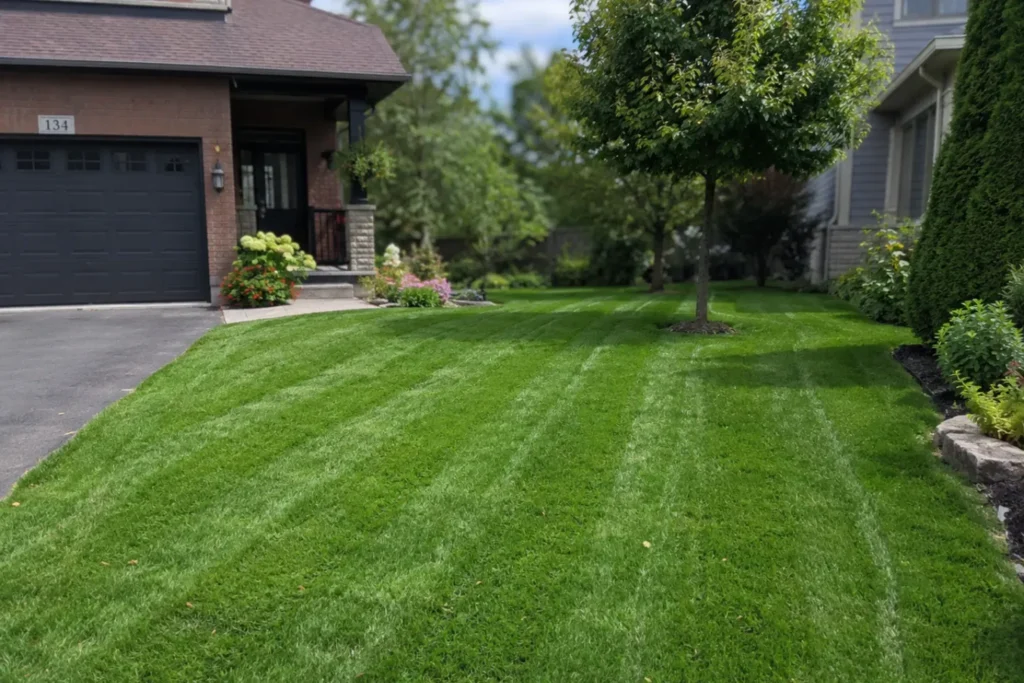
If the damage forms a narrow strip directly beside a driveway, sidewalk, or road, salt exposure is worth investigating. University of Minnesota turfgrass diagnostics identifies long strips of dead or discoloured grass beside paved areas as a common pattern of de-icing salt injury.
Other clues include:
- The damage appeared after winter or during snow melt.
- Salty snow was repeatedly pushed onto the grass.
- Meltwater runs from pavement onto the same section of lawn.
- The rest of the lawn is relatively healthy.
- There is a clear transition between damaged and healthy grass.
- The same strip has suffered similar damage in previous years.
The pattern is useful, but it is not proof.
A strip beside pavement can also be damaged by a snowplow, compacted by traffic, affected by standing water, or damaged by ice-cover conditions during spring melt. University of Minnesota turf diagnostics specifically notes that drainage-related spring damage can resemble salt injury.
Salt Damage vs. Other Spring Lawn Problems
| Problem | What you may notice |
|---|---|
| Salt injury | Brown or straw-coloured grass concentrated beside salted pavement |
| Plow damage | Grass is scraped, torn, displaced, or covered with debris |
| Poor drainage | Water sits on the surface or the same low area stays wet |
| Snow mould | Matted or discoloured grass after prolonged snow cover |
| Compaction | Thin, weak turf and poor growth in areas receiving traffic |
If the grass has been physically torn out of the soil, watering will not solve the problem.
If water remains on the surface, flushing the area with more water may not help either. The drainage problem needs to be addressed first.
How Winter Salt Damages Grass
Sodium chloride, or ordinary road salt, can damage turf in several ways.
High concentrations of soluble salts around the roots make it harder for plants to take up water. Salt can also enter plants through the roots and contribute to dehydration and tissue damage. High soil salinity can eventually cause yellowing, thinning, and plant death.
Sodium can create another problem in some soils. When excessive sodium affects soil structure, infiltration and root growth can suffer. This is different from simply having soluble road salt in the soil, which is why gypsum is not automatically the answer.
Salt reaches a lawn in several ways:
- Snow containing de-icer is shoveled or plowed onto the grass.
- Meltwater carries salt from a driveway or sidewalk into the lawn.
- Traffic sprays salty slush onto roadside grass.
- Repeated applications increase salt exposure during winter.
- Snow storage concentrates treated snow in one part of the property.
A lawn beside a road can receive several of these exposures at once.
That is why a narrow strip beside a driveway can look severely damaged while the middle of the lawn remains healthy.
Start by Cleaning Up the Lawn
Once the ground has thawed and the grass is accessible, clean up the winter debris.
Remove sand, gravel, leaves, dead grass, and other material that has accumulated over the winter. Avoid aggressively raking wet soil. If the ground is soft enough to leave footprints, give it time to dry and firm up first.
Then inspect the soil.
The important question is whether water can actually move through the affected area.
If rainfall or irrigation soaks into the soil and drains normally, water can help move soluble salts below the root zone.
If water sits beside the driveway for hours or days, you may have a drainage problem as well. Adding more water to poorly drained soil is not an effective way to solve the problem.
Check whether:
- The driveway slopes toward the lawn.
- Snow melt collects in the damaged strip.
- There is a low spot beside the pavement.
- The soil is heavily compacted.
- Water remains on the surface after rain.
If the same strip dies every spring, pay particular attention to these conditions. Replacing the grass without changing what caused the damage can leave you with the same problem next year.
Can Watering Remove Salt From the Soil?
Often, yes, provided the soil can drain.
Soluble salts can move downward through the soil with rainfall and irrigation. This process, known as leaching, can reduce salt concentrations in the root zone.
For a homeowner, the basic approach is:
- Clear away winter debris.
- Make sure the soil can absorb and drain water.
- Water thoroughly rather than giving the area frequent shallow sprinkles.
- Allow the soil to drain between watering.
- Monitor the turf as temperatures rise and spring growth begins.
There is no universal number of watering sessions that works for every lawn.
The amount of water required depends on the amount of salt present, soil texture, drainage, rainfall, and how deeply the salts have moved into the soil.
Do not turn the area into a swamp in an attempt to flush it. If water cannot leave the site, drainage needs to be addressed first.
Do You Need Gypsum?
Usually, not as a first step.
Gypsum is sometimes recommended whenever salt damage appears, but it does not simply neutralize road salt or make sodium chloride disappear.
The distinction matters.
Calcium from gypsum can be useful in soils where excessive exchangeable sodium has affected soil structure. That is a different situation from simply having soluble de-icing salt in the soil.
For a typical residential lawn affected by winter salt, the first priorities are:
- reducing further salt exposure
- improving drainage where necessary
- allowing water to move through the soil
- assessing whether the turf is actually dead
- correcting compaction or other site problems
If the soil continues to perform poorly after soluble salts have had an opportunity to move through it, a soil test can help determine whether an amendment such as gypsum is appropriate.
Don’t apply gypsum simply because the lawn is brown.
Do You Need to Replace the Soil?
Usually, no.
A damaged lawn does not automatically mean the soil needs to be removed.
If the damage is relatively light and the existing soil has reasonable structure and drainage, you can often work with what is already there. Depending on the condition of the surface, that may involve removing debris, loosening compacted soil where appropriate, and adding a modest amount of suitable soil before reseeding.
Soil replacement becomes more reasonable when:
- The surface is badly compacted or crusted.
- The existing soil is poor enough that grass has repeatedly failed.
- The surface contains a large amount of winter sand and debris.
- Salt exposure has been severe or repeated.
- You are already correcting the grade or drainage.
- Previous repair attempts have failed.
There is no reason to automatically remove 5 or 10 cm of soil simply because the grass died.
The appropriate depth depends on the condition of the existing soil and what you are trying to establish.
Fix the Grade Before Installing New Grass
This is particularly important beside driveways.
If the driveway sends salty meltwater directly into the lawn, new sod will not change the underlying problem. The new grass will simply receive the same runoff.
Before rebuilding the area, look at where snow melt and rainwater go.
A shallow depression beside the driveway can concentrate both water and salt in exactly the same place every winter.
If you are working on an Ottawa boulevard, check the City’s current requirements before changing the grade or surface. Ottawa’s Use and Care of Roads By-law restricts changes to boulevard grades that redirect overland water.
Should You Use Seed or Sod?
Either can work.
The choice depends on the size of the damaged area, how quickly you need coverage, the existing lawn, and the type of turf you want to establish.
Seed
Seed is practical for many smaller repairs and gives you more control over the grass species.
It can also make sense when you want a mixture containing turfgrasses with better tolerance to salt exposure. University of Minnesota Extension recommends salt-tolerant fine fescue grasses for areas near roads, sidewalks, and driveways where de-icing salts are used.
Seed requires patience. The area needs consistent moisture while the grass establishes, and you may need to protect it from traffic.
Sod
Sod provides immediate ground coverage and can be useful when appearance matters or when you need the area covered quickly.
The limitation is that you have less control over the exact grass mixture. Check the species contained in the sod before installing it beside a heavily salted driveway or road.
Putting a salt-sensitive turf in the same location that killed the previous turf does not solve the underlying problem.
What About Hydroseeding?
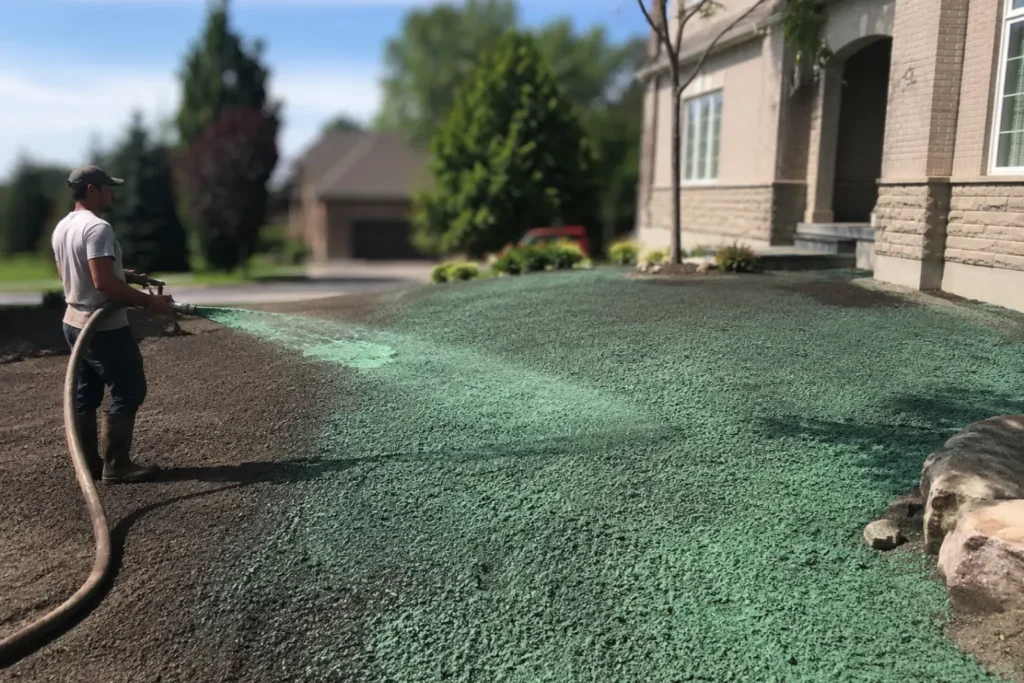
Hydroseeding can be useful on larger areas, slopes, and awkward sites where conventional seeding is difficult.
It does not make grass resistant to salt.
The same soil, drainage, turf-selection, and winter-exposure issues still apply.
Which Grass Should You Use?
If a section of lawn is repeatedly exposed to road salt, grass selection matters.
University of Minnesota Extension reports that fine fescues perform well under high-salinity conditions and identifies Kentucky bluegrass as a poor performer where roadside salt concentrations are high.
That does not mean the entire lawn needs to be replaced with fine fescue.
For a narrow problem area, it may make more sense to choose an appropriate seed mixture for that location.
Look at the actual species listed on the seed bag rather than relying only on a marketing claim such as “salt tolerant.”
Also consider sunlight, soil moisture, and traffic. A grass that tolerates salt well can still perform poorly if it is planted in conditions that do not suit it.
When Should You Repair the Lawn in Ottawa?
Don’t rush to repair a lawn while the soil is still frozen or saturated.
Spring is a useful time to assess winter damage because the pattern becomes visible after snow melt. Once the soil is workable, clean up the area and see whether surviving grass begins to recover.
This is important because brown spring turf is not necessarily dead turf.
Late summer can also be a good establishment period for cool-season grass because soil temperatures remain suitable for germination while air temperatures become less stressful.
The exact calendar date matters less than the conditions.
Seed needs suitable soil temperature, adequate moisture, and enough time to establish before the next major period of stress.
Avoid starting a large seeded repair during extreme heat and drought unless you can reliably irrigate it.
Sod has a wider installation window, but it still needs regular watering while its roots establish.
How to Prevent Salt Damage Next Winter
Prevention starts before the next major snowfall.
Clear Snow Before Using De-Icer
The less snow and ice you are trying to deal with, the less de-icer you generally need.
Ottawa advises residents to clear snow first and use the appropriate amount of salt for the conditions. The City’s current guidance says that, on average, one cup of salt is enough to cover a single-car driveway. It also warns that excessive salt can harm plants, trees, soils, and water quality.
That figure is an average guideline, not a recommendation to apply one cup regardless of the conditions or product being used.
More salt does not necessarily mean better results.
Follow the instructions for the product you are using and apply only the amount needed.
Don’t Pile Salty Snow on the Lawn
Snow removed from a driveway can contain salt, sand, and other debris.
If possible, avoid repeatedly placing treated snow in the same strip of grass. A lawn edge that receives a large amount of salty snow all winter will experience considerably more exposure than an area that receives only occasional runoff.
Shovel First
Mechanical snow removal reduces the amount of de-icer needed.
Salt is a tool for dealing with remaining ice and slippery conditions, not a replacement for removing snow.
Consider Changing the Edge
If the same narrow strip dies every year, grass may simply be a poor choice for that location.
Depending on the property, you might consider a planting bed, suitable hardscape, or another appropriate surface.
For an Ottawa boulevard, check the City’s current requirements before making changes. Boulevard work is subject to local rules, and the City’s by-law specifically addresses drainage, planting, and alterations within the right-of-way.
What If the City Damaged the Boulevard?
Not all winter lawn damage is caused by salt.
If a municipal snowplow physically damaged the grass, that is a different problem from salt injury.
The City of Ottawa says residents can report lawn damage caused by City vehicles. Staff investigate the damage in early spring after snow and ice have melted, and confirmed damage caused by City vehicles is repaired using topsoil and grass seed rather than sod.
If you think a City vehicle damaged the boulevard, photograph the damage before repairing it yourself.
The distinction matters. Damage caused by municipal equipment is different from damage caused by your own snow removal, a private contractor, salt applied on your property, or normal winter exposure.
When Should You Stop Repairing the Grass?
If the same strip fails every year, stop treating it as a simple reseeding problem.
Look at the site as a whole.
You may be dealing with:
- repeated salt exposure
- salty snow storage
- runoff from the driveway
- poor drainage
- compacted soil
- repeated plow damage
- heavy foot traffic
A narrow strip that needs to be reseeded every spring is telling you something about the site.
Sometimes the better long-term solution is to change the edge rather than continually replacing the turf.
A Practical Salt-Damage Repair Plan
For most homeowners, the process is straightforward:
- Check the pattern. If the damage follows the pavement and appeared after winter, salt is a reasonable suspect. Check for plow damage and drainage problems too.
- Clean up the area. Rake away sand, gravel, leaves, and dead material once the soil is firm enough to work.
- Check drainage. Make sure water can move into and through the soil.
- Flush the soil if appropriate. Once the soil has thawed, adequate watering can help move soluble salts below the root zone when drainage is good.
- Give surviving grass a chance. Don’t assume brown spring grass is completely dead. Some turf can recover as temperatures rise and soil conditions improve.
- Reseed or replace badly damaged areas. Choose a suitable turf mixture, particularly if the location receives regular salt exposure.
- Change the winter routine. Clear snow before applying de-icer, use only the amount required, and avoid repeatedly piling treated snow on the grass.
Frequently Asked Questions
Will salt-damaged grass grow back?
It can, if the injury is not severe enough to kill the plants.
Give the lawn some time after snow melt before deciding that every brown area needs to be replaced. If the grass is genuinely dead, reseeding or new sod will be necessary.
How long does salt stay in the soil?
There is no fixed number of days.
Soluble salts can be moved by rainfall and irrigation, but the rate depends on the amount of salt, soil characteristics, drainage, and how water moves through the site.
Does gypsum fix salt damage?
Not by itself.
Gypsum does not simply neutralize sodium chloride. It can be useful in soils affected by excessive exchangeable sodium, but that is a different problem from ordinary soluble salt accumulation.
Is Kentucky bluegrass a good choice beside a salted driveway?
It can be vulnerable when salt concentrations are high.
University of Minnesota Extension reports poor performance from Kentucky bluegrass under high roadside salt concentrations and identifies fine fescues as better-suited to high-salinity conditions.
The right choice still depends on the site’s sunlight, moisture, soil, and traffic.
Should I use seed or sod?
Either is possible.
Seed gives you more control over the grass species and is often practical for smaller repairs. Sod provides immediate coverage and can be useful when you need the area covered quickly.
When should I repair the lawn?
Wait until the soil is workable and conditions are suitable for establishment.
Spring can work once the ground has thawed and conditions are suitable. Late summer is another useful window for cool-season turf.
Avoid starting a large seeded repair during extreme heat unless you can provide dependable irrigation.
Can salt damage be prevented completely?
Not always.
A lawn beside a heavily salted road or sidewalk will probably receive some exposure.
You can reduce the damage by clearing snow first, limiting de-icer use, and preventing treated snow from accumulating repeatedly on the grass.
What if the same strip dies every year?
Investigate the site instead of simply replacing the grass again.
Repeated failure can point to salt exposure, runoff, poor drainage, compaction, or physical winter damage.
If the underlying condition does not change, new turf may fail in exactly the same place.
Does road salt damage other plants?
Yes.
De-icing salt can affect shrubs, trees, and other vegetation near roads and sidewalks. Salt spray can injure foliage, while salt that reaches the soil can affect roots and soil conditions.
The City of Ottawa also notes that salt and abrasive materials used during winter can affect soil quality for plants close to roads and sidewalks.
The Bottom Line
A brown strip beside your driveway in spring does not automatically mean you need new sod.
Start with the pattern.
If the damage follows a salted pavement edge and appeared after winter, salt is a reasonable suspect. But check drainage and look for physical damage before doing major repairs.
If salt is the problem, reduce further exposure and, where drainage is adequate, use water to help move soluble salts through the soil. Give lightly damaged turf some time to recover before replacing it.
For grass that is genuinely dead, reseeding or sod can restore the area.
If the same strip dies every winter, though, look beyond the grass.
The combination of salt, runoff, drainage, snow storage, compaction, and winter maintenance may be the real problem.
Fix that, and you may not have to repair the same strip again next spring.